


The British Prime Minister said officials repeatedly failed to provide advice.
Keir Starmer, the British Prime Minister, attends a press conference following a multinational virtual summit at the Élysée Presidential Palace in Paris, France, on April 17, 2026. — Reuters
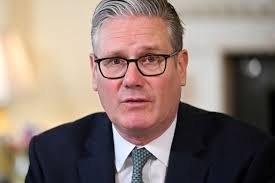
Keir Starmer on Monday placed responsibility on foreign ministry officials over the appointment of a US ambassador, saying they failed to disclose information about Labour veteran Peter Mandelson that could have prevented his selection.
Facing calls from opponents to step down over the controversy, Starmer has continued to defend his role. Addressing parliament, he argued that he was unaware officials had been advised to deny Mandelson security clearance.
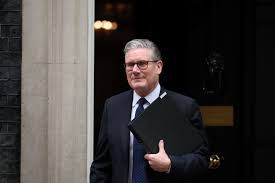
Keir Starmer again said he regretted appointing Peter Mandelson, whom he dismissed in September after disclosures about the extent of his links to late US sex offender Jeffrey Epstein. The controversy has raised fresh doubts about the prime minister’s judgment, especially after the government revealed last week that Mandelson had failed a security vetting process.
On Monday, Starmer expressed anger that foreign ministry officials had not informed him that in January 2025 they had ignored advice and granted Mandelson “developed vetting” clearance, allowing access to highly classified information.
“It beggars belief that, throughout this entire timeline, officials in the foreign office chose to withhold this information from the most senior ministers,” Starmer told parliament. “That is not how people in this country expect politics, government or accountability to function.”
Starmer said he would not have made the appointment had he known the full details. What was once seen as a strategic move—appointing a seasoned Labour figure with trade expertise to engage with incoming US President Donald Trump—has instead become a prolonged political crisis for his government.

Former British ambassador to the United States Peter Mandelson was seen walking his dog outside his residence in London on April 20, 2026, as Keir Starmer prepared to address the vetting process behind Mandelson’s appointment. — Reuters
In a post on Truth Social, Donald Trump backed criticism of the decision, calling it a “really bad pick,” while noting there was still time for recovery.
Starmer said he would not have appointed Mandelson had he known that the UK Security Vetting unit advised against granting him clearance. He added that he has since ensured the foreign office can no longer override such advice in future.
The prime minister, whose popularity has declined since Labour’s landslide victory in 2024, had earlier told parliament that proper procedures were followed. His spokesperson later clarified that he had not been aware of the full details at the time and would never knowingly mislead parliament or the public.
Following revelations that officials had overridden warnings about Mandelson, Starmer dismissed senior foreign office official Olly Robbins, saying he had approved a statement suggesting Mandelson had cleared vetting. Robbins has not publicly responded, though associates say he followed standard procedures that allowed such decisions.
Opponents have accused Starmer of dishonesty and poor judgment, arguing his position is increasingly difficult to defend. With local elections approaching and Labour expected to face losses, the controversy has renewed scrutiny of his leadership.
Opposition leader Kemi Badenoch criticized Starmer for avoiding responsibility, telling parliament that true leadership is shown by owning mistakes rather than shifting blame onto staff and officials.