




Pakistan Extends Airspace Ban: Indian Aviation Losses Mount
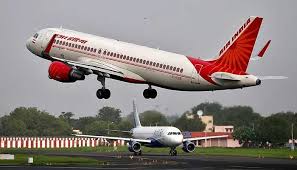
The Pakistan Airports Authority (PAA) has further extended the closure of its airspace to all Indian-registered aircraft, a restriction that has remained in place since early 2025. This move continues to force Indian carriers onto longer, more expensive flight paths, significantly impacting the industry’s bottom line.
Impact Overview
- Operational Strain: Since 2025, no Indian airlines have been permitted to enter the Karachi or Lahore Flight Information Regions (FIRs). This includes all commercial, private, and military flights owned or operated by Indian entities.
- Financial Fallout: The Indian aviation sector is grappling with billions in cumulative losses. The ban necessitates massive detours for flights heading to Europe, North America, and the Middle East, leading to:
- Substantially higher fuel consumption.
- Increased crew costs due to longer flight durations.
- Reduced cargo capacity to accommodate extra fuel weight.
- Logistical Challenges: Key long-haul routes now take several hours longer than they did prior to the 2025 restrictions, placing Indian carriers at a competitive disadvantage against international airlines that can still use Pakistani corridors.
The Status Quo
The closure remains tied to the geopolitical tensions that spiked in April 2025. Despite various international appeals for de-escalation in the aviation sector, Islamabad has maintained the ban, citing national security concerns. For Indian airlines, the “great detour” has now become a costly, long-term reality.
One Year On: Pakistan Extends Airspace Ban as Indian Aviation Losses Surge
Pakistan has officially extended its ban on Indian aircraft for another month, marking a full year of restricted skies between the two nuclear-armed neighbors. According to a fresh Notice to Airmen (NOTAM) issued by the Pakistan Airports Authority (PAA), all Indian-registered, commercial, leased, and military flights are barred from Pakistani airspace until 5:00 AM on May 24, 2026.
A Year of “Tit-for-Tat” Restrictions
The current blockade began on April 24, 2025, triggered by a rapid breakdown in bilateral relations.
- The Trigger: Following an attack in Pahalgam (IIOJK), India suspended the Indus Water Treaty. In a direct “tit-for-tat” response, Islamabad closed its airspace to Indian carriers.
- Reciprocity: On April 30, 2025, India followed suit by shutting its own airspace to Pakistani airlines.
- Escalation: Tensions culminated in a short but intense conflict in May 2025. Following Indian strikes, Pakistan launched “Operation Bunyanum Marsoos,” reportedly downing seven Indian fighter jets (including three Rafale) and numerous drones. A U.S.-brokered ceasefire ended the hostilities on May 10, 2025.
Economic and Operational Impact
While both nations have closed their skies, the financial burden has been significantly lopsided:
| Impact Category | Indian Aviation Sector | Pakistani Aviation Sector |
| Financial Loss | Billions of rupees in losses. | Minimal reported impact. |
| Operational Costs | Massive fuel hikes due to long detours for Westward flights. | Negligible disruption to primary routes. |
| Historical Context | Mirroring the 1999 and 2019 crises, India faces deeper disruption. | Sustained minimal regional fallout. |
The Current Reality
For Indian airlines, the extension means another month of the “great detour.” Flights heading to Europe and North America must continue to bypass Pakistani territory, adding hours to flight times and driving up ticket prices. Despite the ceasefire agreement reaching its first anniversary, the skies remain a primary front in the ongoing diplomatic and economic standoff.